


Buy Heavy Duty Gym Equipment Online: A 2026 Guide

Table of Contents
- What Defines Heavy Duty Gym Equipment?
- Commercial Grade Gym Equipment for Home: Worth the Upgrade?
- Heavy Duty Power Rack Weight Capacity: What the Numbers Mean
- Selectorized Machines vs. Free Weights for Home Use
- Gym Equipment Shipping and Installation Costs
- Space Planning and Floor Load Considerations
- New vs. Used Heavy Duty Equipment: A Cost-Benefit Analysis
- Safety Standards and Warranty Coverage to Verify
- Frequently Asked Questions
Last Updated: September 5, 2026
Buying heavy duty gym equipment online is a significant investment in your training future, yet most buyers focus only on the sticker price and miss the factors that determine whether a rack or machine will still be rock-solid in a decade. Heavy duty gym equipment is defined by its structural integrity, material quality, and load ratings, not by marketing claims or brand recognition. Heavy duty gym equipment is defined by its structural integrity, material quality, and load ratings, not by marketing claims or brand recognition. Below, we will show you exactly how to read the specifications that matter, avoid common purchasing mistakes, and build a home gym that serves you for years, not months.
What Defines Heavy Duty Gym Equipment?
Heavy duty gym equipment is gear engineered to withstand repeated, high-intensity use without structural failure or excessive wear. The distinction between commercial-grade and residential-grade equipment is not a marketing gimmick; it is a measurable difference in steel thickness, weld quality, and component sourcing.
Three specifications separate true heavy duty equipment from lighter alternatives:
- Steel gauge and tubing size: Look for 11-gauge or thicker steel (lower gauge numbers mean thicker steel) on structural components like uprights and crossmembers. Many residential racks use 14-gauge steel, which flexes under heavy loads.
- Weight capacity and load rating: A power rack rated for 1,000 pounds or more of rackable weight provides a substantial safety margin for most lifters. This rating reflects the frame's tested limit, not a suggestion.
- Weld quality and finish: Commercial-grade welds are continuous and ground smooth. A powder-coated finish resists chipping and rust far better than painted surfaces, which matters in humid garage environments.
Commercial-grade gym equipment for home use is built to the same standards as equipment found in professional facilities. The tradeoff is weight and cost, but the durability payoff is substantial for anyone training heavy multiple times per week.
Commercial Grade Gym Equipment for Home: Worth the Upgrade?
For most dedicated lifters, commercial grade gym equipment for home is worth the upgrade if you train consistently and value longevity over upfront savings. The primary advantage is durability: commercial-grade components are designed for continuous use across decades, meaning your investment spreads across far more workouts.
The differences become apparent in daily use. Selectorized machines with commercial weight stacks use precision-guided steel plates that move smoothly, while budget machines often use plastic bushings that wear out. Adjustable benches built to commercial spec use heavier gauge frames and thicker padding that maintains its shape. Cable systems on commercial units route through sealed bearings rather than simple pulleys, reducing friction and cable wear.
A common mistake is assuming that "heavy duty" on a product listing guarantees commercial-grade construction. Verify the specifications yourself. Check the weight capacity, steel gauge, and warranty terms. A power rack with a 1,000-pound capacity from a specialist provider will typically outperform a cheaper unit rated for half that load, even if both claim heavy duty status.
Heavy Duty Power Rack Weight Capacity: What the Numbers Mean
The heavy duty power rack weight capacity tells you the maximum load the frame can safely support, but interpreting that number requires context. A rack rated for 1,000 pounds can hold that weight across the barbell, plus the dynamic forces generated during a failed rep or a dropped lift.
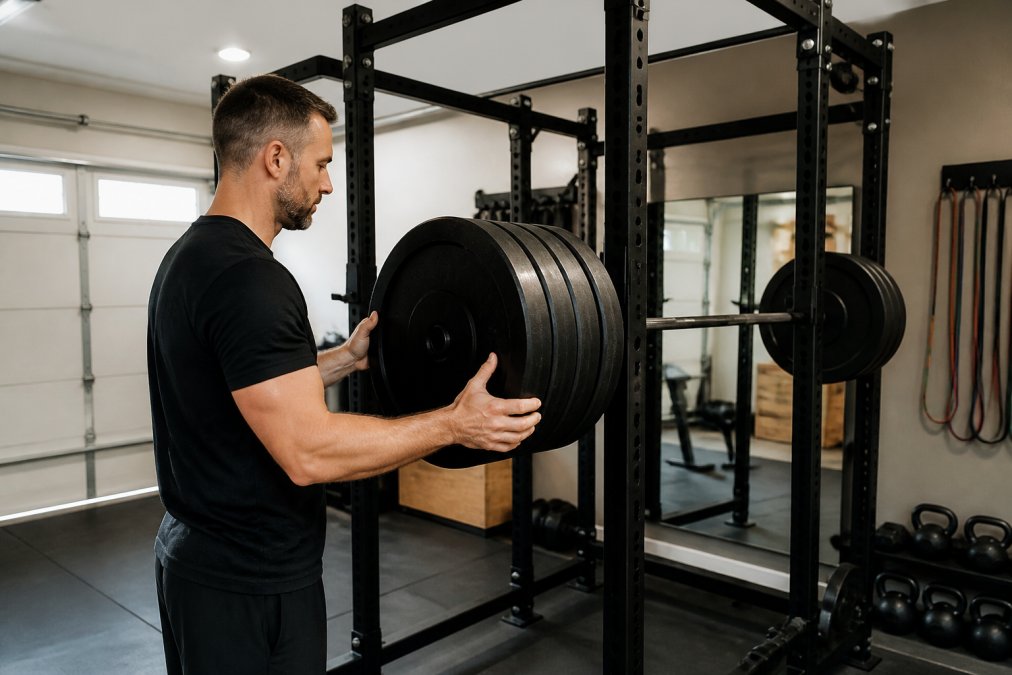
When evaluating capacity, consider your actual training weight plus a safety buffer. If you squat 400 pounds, a rack rated for 700 pounds gives you room to grow and accounts for the jarring impact of reracking a heavy bar. Commercial racks often rate their structures well above 1,000 pounds, reflecting their use in professional settings.
The load rating applies to the rack's structural capacity, not the included accessories. J-hooks, safety bars, and dip attachments have their own weight limits, often lower than the frame's rating. Check each component's rating separately. A 1,000-pound rack with 500-pound J-hooks is only as strong as its weakest link.
Selectorized Machines vs. Free Weights for Home Use
Selectorized machines excel at providing safe, controlled resistance for hypertrophy training, while free weights offer superior functional strength development and require more stabilization. The right choice for your home gym depends on your training goals, available space, and experience level.
A selectorized machine, like a functional trainer with dual weight stacks, lets you adjust resistance by moving a pin. This convenience makes it easy to superset exercises quickly. The tradeoff is a large footprint and a higher price point compared to a simple squat stand.
Free weights, including a power rack, barbell, and plates, deliver the most training versatility per square foot. You can perform squats, presses, deadlifts, and rows with a single setup. This approach demands proper form and a spotter or safety equipment for heavy lifts.
For most home gyms, a combined approach works best. A power rack handles compound lifts, while a compact selectorized machine or functional trainer covers isolation work and cable exercises. Space-efficient options like power towers provide bodyweight training in a vertical footprint, though they lack the loading capacity for progressive resistance.
| Equipment Type | Best For | Space Needed | Versatility | Price Range |
|---|---|---|---|---|
| Power Rack | Compound lifts, powerlifting | Large | High | Moderate to High |
| Functional Trainer | Cable exercises, isolation | Large | Very High | High |
| Power Tower | Bodyweight training | Compact | Moderate | Low |
| Squat Stand | Squats, overhead press | Small | Moderate | Low to Moderate |
Gym Equipment Shipping and Installation Costs
Gym equipment shipping and installation costs vary significantly based on item weight, delivery method, and whether professional assembly is required. Heavy items like power racks and selectorized machines often ship by freight carrier, not standard parcel delivery, which changes the logistics and cost structure.
Freight shipping for large equipment typically means curbside delivery, where the carrier drops the pallet at your driveway or building entrance. Moving a 400-pound rack from the curb to your training space is your responsibility unless you pay for inside delivery or white-glove service. White-glove delivery includes room of choice placement and packaging removal, which is worth the premium for basement gyms or multi-story homes.
Assembly costs depend on complexity. A power rack takes one person roughly one to two hours to assemble with basic tools. A functional trainer with dual weight stacks is more complex, often requiring two people and several hours. Many buyers opt for professional assembly services to ensure proper setup, especially for machines with intricate cable routing.
Budget for these costs when comparing prices. A seemingly cheaper rack from one provider may become more expensive once you add freight shipping and assembly fees. Conversely, a higher upfront price that includes free shipping and assembly services can represent the better total value.
Space Planning and Floor Load Considerations
Before you buy heavy duty gym equipment online, measure your space and understand your floor's load capacity. A dedicated home gym requires more than just floor area for the equipment footprint; you need clearance for loading bars, performing lifts, and moving around the rack safely.
Standard power racks occupy roughly 4 feet by 4 feet of floor space, but you need additional room for barbell loading and unracking. Plan for at least 8 feet by 8 feet for a single rack station. Ceiling height is equally critical. You need enough clearance to perform overhead presses and, for pull-ups, to hang from the bar without touching the ceiling.
Rubber gym flooring is non-negotiable for protecting both your equipment and your floor. Stall mats, typically 3/4-inch thick rubber, absorb impact from dropped weights and prevent the equipment frame from scratching concrete. For upper-floor gyms, consult a structural engineer to verify the floor can handle concentrated loads from heavy racks and dropped weights.
New vs. Used Heavy Duty Equipment: A Cost-Benefit Analysis
Used heavy duty equipment offers significant upfront savings, but the total cost of ownership depends on the equipment's condition, remaining lifespan, and your ability to transport it. New equipment includes a warranty, known history, and factory support, which carries real value for major purchases.
Marketplaces specializing in refurbished commercial equipment offer access to professional-grade brands at reduced prices. The inventory fluctuates, but patient buyers can find exceptional deals on racks, machines, and cardio units. The tradeoff is the absence of a manufacturer warranty and the risk of hidden wear in cables, pulleys, and upholstery.
For power racks and free weights, used equipment is often a smart purchase. Steel frames and cast iron plates rarely wear out, and cosmetic scratches do not affect performance. For selectorized machines and treadmills, new equipment is generally safer. Cable systems, motors, and electronics have finite lifespans, and replacement parts for older commercial models can be difficult to source.
Consider the logistics of used equipment. Freight shipping costs apply, and you cannot inspect the item before purchase. If you buy locally, you handle pickup and transport yourself. Factor these costs and effort into your comparison against new equipment with free shipping and a warranty.
Safety Standards and Warranty Coverage to Verify
Safety standards and warranty coverage protect your investment and your well-being during training. Before purchasing, verify that the equipment meets relevant safety certifications and that the warranty covers structural components for a reasonable period.
Commercial-grade equipment typically carries longer warranties than residential gear. Look for lifetime warranties on frames and structural welds, which indicate the manufacturer's confidence in their product. Moving parts like cables, pulleys, and upholstery usually have shorter warranty periods, typically one to three years. The Consumer Product Safety Commission guidance on home gym safety recommends regular inspections of equipment for wear and damage, particularly on cables and connections.
Welded steel frames are the backbone of heavy duty equipment, and reputable manufacturers back their welds with extended warranties. A lifetime frame warranty from a specialist provider signals that the structural integrity is engineered to last. In contrast, shorter warranty periods may indicate lower-grade materials or construction.
Ask about warranty claims processes before purchasing. Understand whether you handle shipping for defective parts or if the manufacturer covers it. Check the Federal Trade Commission guidance on warranty rights to understand your protections under the Magnuson-Moss Warranty Act. This federal law requires manufacturers to state warranty terms in plain language, making it easier to compare coverage across brands.
Regular maintenance extends equipment lifespan. Wipe down frames after use, lubricate pulleys and guide rods per manufacturer instructions, and check bolts for tightness monthly. The American Council on Exercise equipment maintenance recommendations notes that proper care prevents most common equipment failures and ensures consistent performance. A well-maintained power rack from a quality provider should outlast a decade of heavy training.
Building a home gym around heavy duty gym equipment requires patience and research, but the payoff is a training space that performs reliably for years. At Plowed The Surge, we curate premium fitness equipment built to support serious strength training, with the durability and load ratings that matter for consistent progress. Our selection focuses on professional-grade gear for athletes and fitness enthusiasts who refuse to compromise on quality. Explore our collection and find the equipment that matches your training goals.
Frequently Asked Questions
What should I look for when buying heavy duty gym equipment online?
Focus on three specs: steel gauge (11-gauge is standard for heavy duty), the weight capacity rating, and the powder-coated finish quality. Verify the frame is welded rather than bolted at critical joints. Check the warranty terms, especially for the frame and moving parts. Read reviews about assembly difficulty and how the equipment handles daily use over months, not just the first week.
Is it worth buying commercial grade gym equipment for home?
For serious lifters training 4+ days per week, yes. Commercial grade equipment uses thicker steel and better welds, which means less wobble during heavy lifts and a longer lifespan. The trade-off is cost and footprint. If you are an intermediate lifter or train less frequently, a quality residential piece with a heavy duty power rack weight capacity may serve you well at a lower price.
How do I verify the weight capacity of gym equipment before purchasing?
Look for the manufacturer's stated load rating, usually found in the spec sheet. For power racks, this number indicates the maximum weight the frame and safety catches can hold. Check if the rating applies to the whole rack or just the J-hooks. A rating of 1,000 lbs or more with 11-gauge steel is the standard for heavy duty home use.
What are the shipping considerations for heavy duty gym equipment?
Heavy duty equipment ships freight, not parcel. Ask if the price includes curbside delivery or white-glove service with room-of-choice placement. Check the delivery window and whether a lift gate is available for loading docks or steep driveways. Assembly is typically separate, so budget for that or plan to assemble with a partner, as most racks require two people.
